
This Startup's Drones Recharge Like Birds — Sitting on a Powerline
From moon rovers to autonomous drones, Anis Cheriet of Chargebotic is building a charging system with no plug at all.

“Elon says we’re going to have more robots than humans in ten years,” Anis Cheriet tells me. “How do we charge them?” We are sitting in an industrial workspace in Fort Mason at Founders, Inc’s Off Season II accelerator. Cheriet goes on, “In an ideal world, how should this robot be charged?”
When Cheriet arrived in San Francisco just eighteen months ago, he did so with little more than a dream—and seven years of experience deploying over two thousand superchargers across Europe under his belt.
“My dream was to come to SF and be where AGI is to shape the world, to shape the future,” Cheriet tells me. “When I arrived here, the first thing that I did was content to make money.”
Cheriet opened a studio podcast, interviewed founders in the streets, and eventually built a mobile app for customers that didn’t really take off. The experience taught him that his ability to ship a product wasn’t his competitive advantage.
“To have an edge,” Cheriet explains, “you have to have something that people don’t have.”
What he had was experience in charging.
“I’m going to charge the next wave,” Cheriet says. “What’s the next wave? Robots.” It would take several pivots before that idea became Kestrel, the product Chargebotic is building today.
Charging on the Moon
Supercharging was a problem that Cheriet had spent years managing in Europe, and it had proven expensive, time-consuming, and difficult to implement.
“I want to remove the land problem and remove the timing problem to get plugged to the grid,” Cheriet says.
His first idea: charging a rover on the moon.
Cheriet went to a robotics hackathon, eager to explore his idea. “I found a guy in the middle of the crowd holding a rover in his hands.”
That guy was Bo Christopher Redfearn, Cheriet’s future co-founder.
From Rovers to Drones
Cheriet immediately asked the question. “I said, ‘Have you thought about charging this rover?’ He said, ‘What—why?’” Cheriet tells me.
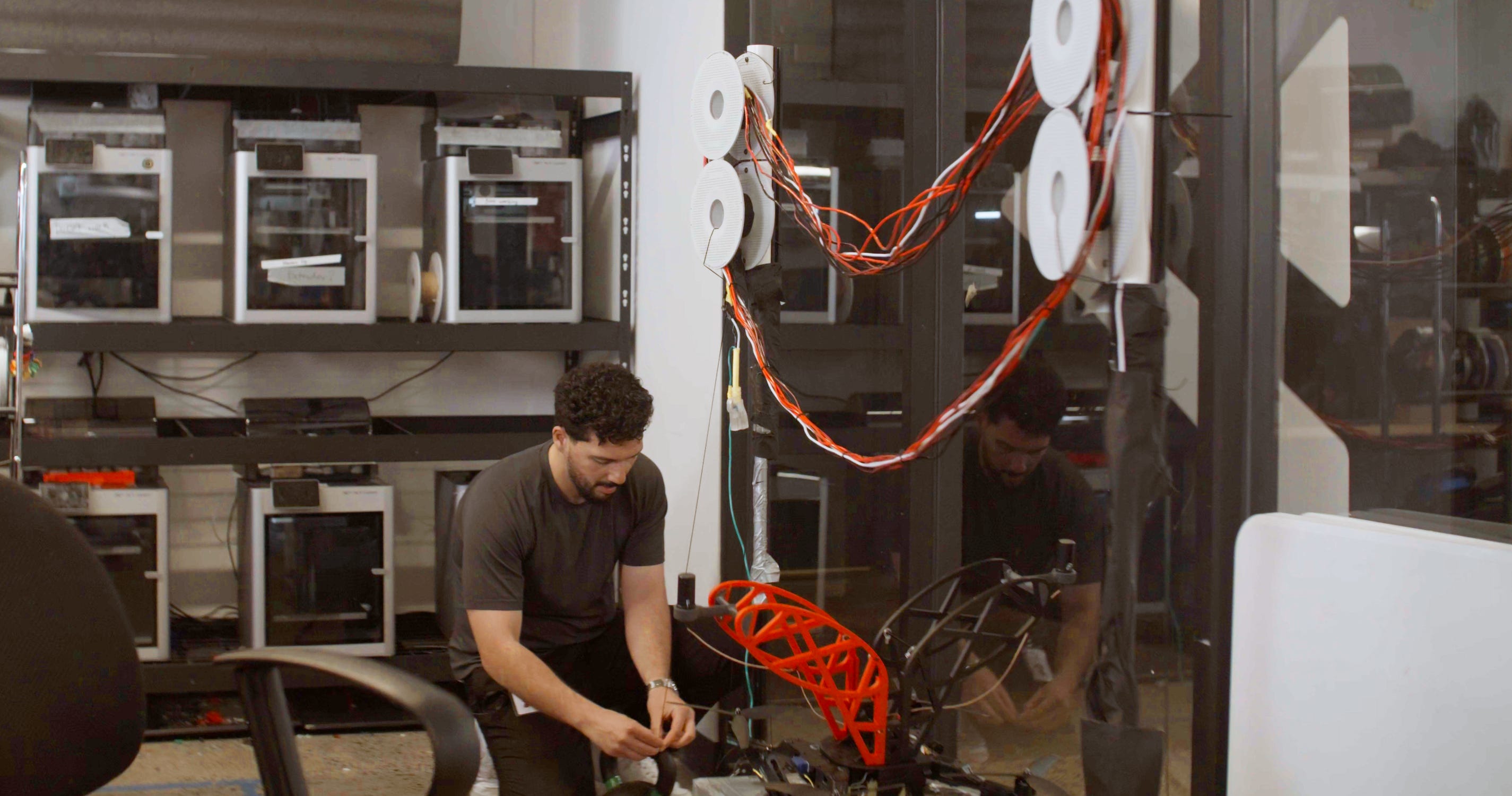
“We ended up building a pad that you put on a wall and the robot autonomously finds it and taps to it,” Cheriet recalls. “It was our first product. People were excited about it because we did it differently.”
For their rover-on-the-moon idea, “[the system] should be wireless. It should be rough and robust,” Cheriet says. “But we were facing this real truth: you need to make money.”
Cheriet and Redfearn talked with Doordash, with Robot.com, and with other major robotics companies, trying to sell them their charging system.
Over and over, they received the same response: “Yes, it’s a problem, but not enough for us to focus on it. We will just resolve it later.”
“The pain was not so high there,” Cheriet tells me.
So, they pivoted.
“We iterated again and again. Every iteration, we built a product around it.”
Wall-based charger, regular charger, fast charger.
Then, something clicked: “[Redfearn] wanted to do drones.”
Looking Up
“Drones are robots,” Cheriet tells me. “They are the most used across all companies. For inspection purposes, for surveillance, for delivery now, for data collection; now even in defense, striking with drones.”
“How can we charge a drone—the best way?” Cheriet asks.
He answers his own question: “The best way for a drone…is just to recharge from a powerline. Because powerlines are everywhere.”
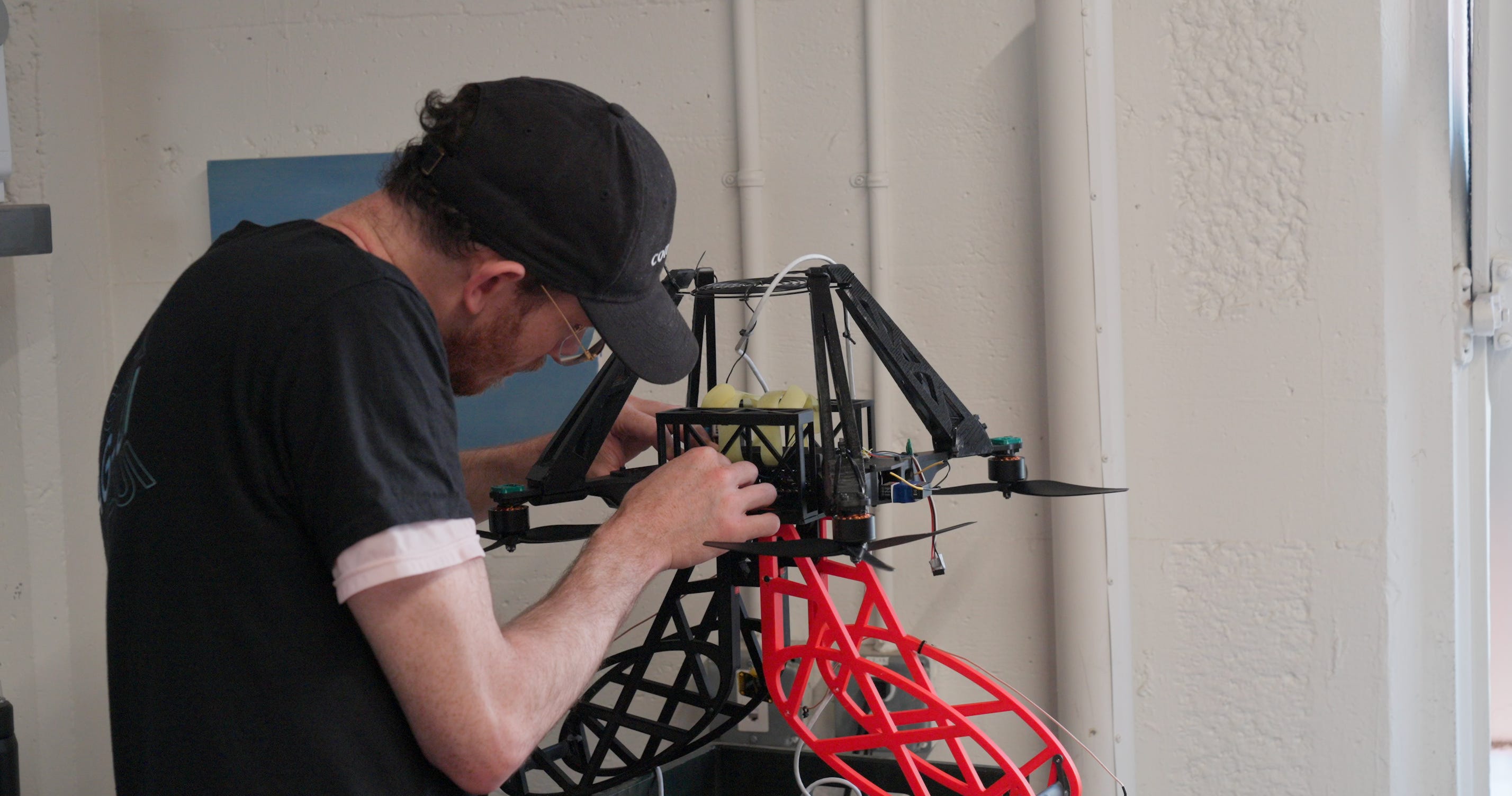
Cheriet and Redfearn dove into the research before building. They found a paper suggesting it was possible and began to develop a proof of concept.
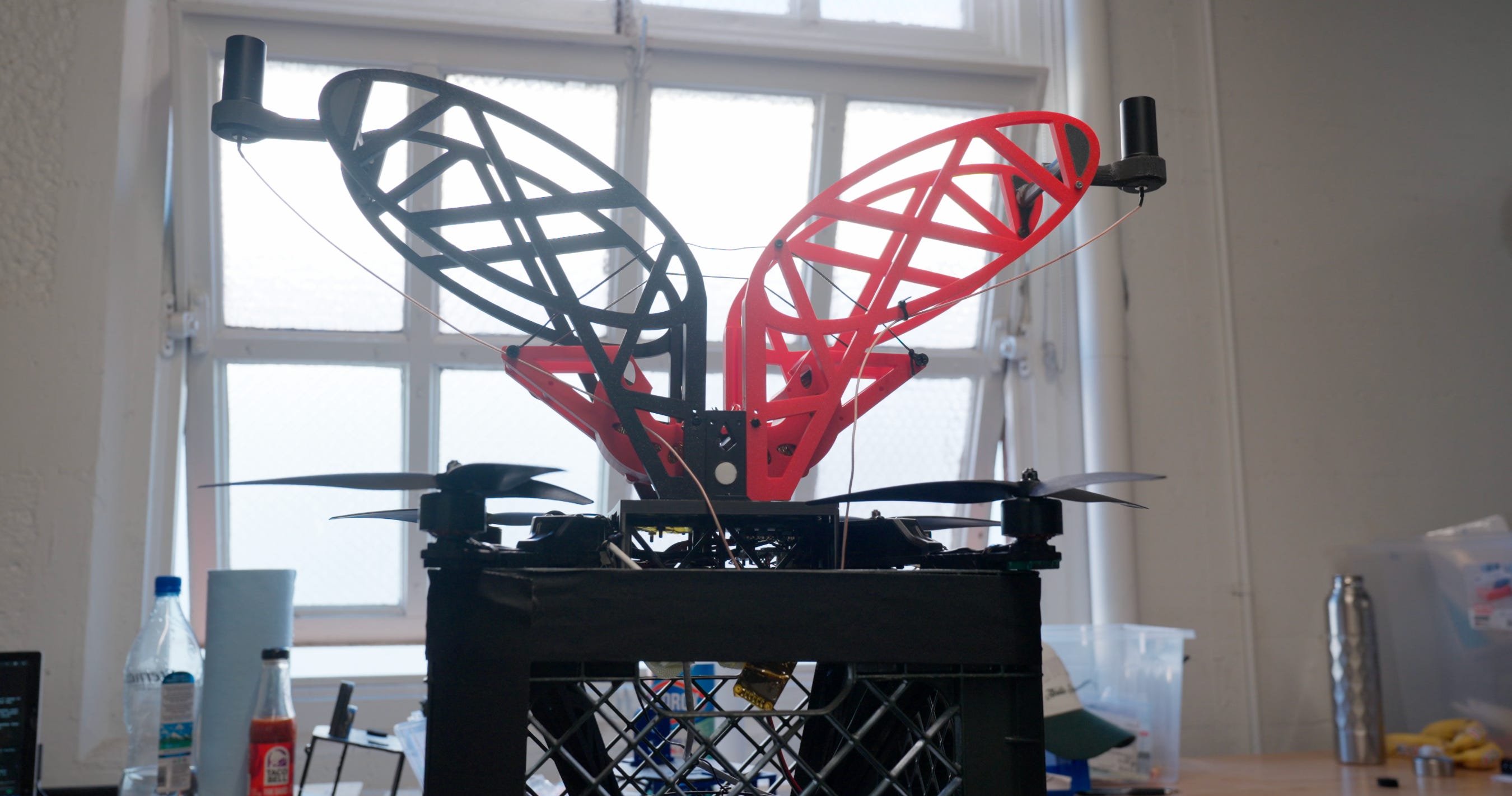
“A wire has electrons inside,” Cheriet says. “Imagine instead of having electrons inside, you have water flowing inside. The higher the flow, the more the tube will vibrate. So, what we’re doing is harvesting the vibrations. Which means we are not harvesting the electrons inside the wire, but instead are harvesting the magnetic field.”
Cheriet and Redfearn began to post the concept on X. “It was viral,” Cheriet says. “People began to interact with this idea—having a drone that could charge from a powerline—which was solving one of the biggest problems in drones.”
A New Kind of Charger
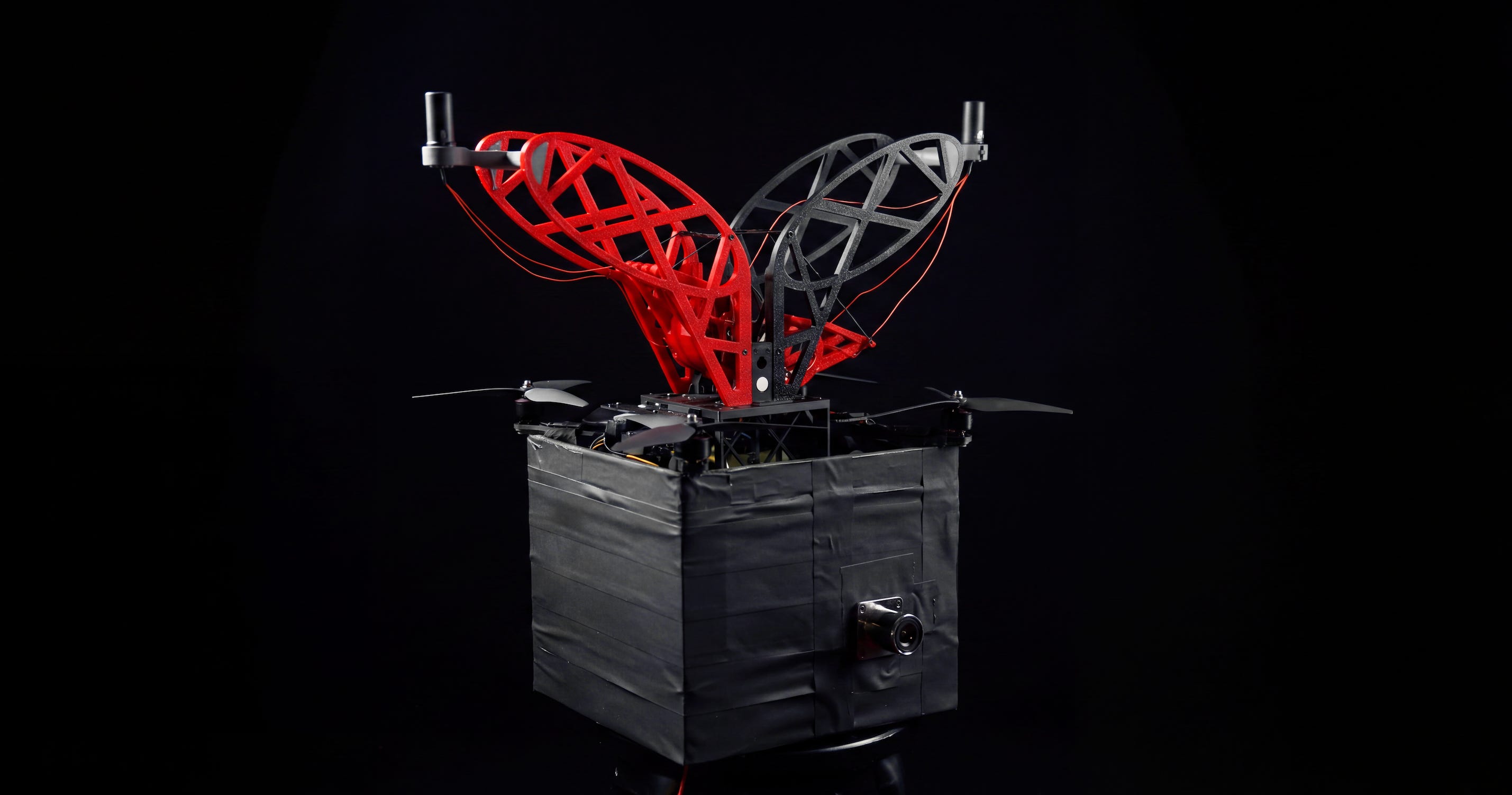
Their product, Kestrel, is a drone case that a user can place on a truck. The drones fly out, complete their mission, then recharge directly from nearby powerlines. And, hanging off of a powerline, the drones can do more than self-charge—they can power other devices.
“The use cases: power a starlink, a small vehicle, a medical shelter, a 3D printer in the desert or in the forest or in the snow or even in Alaska,” Cheriet tells me. “This is the good thing about powerlines,” he reiterates. “They are everywhere.”

Chargebotic’s team is growing fast. Each week, they have three to four new people who want to contribute to the team and hack on the product. More than twenty people have joined as part-time employees since Chargebotic entered the Off Season II accelerator.
“People believe in it,” Cheriet tells me with a shrug, by way of explanation.
Charging Ahead
Right now, Chargebotic is raising their pre-seed round, and they plan to raise a seed round in the near future.
“Making hardware is hard because it’s hardware, but also because nobody even wants to invest in hardware,” Cheriet says.
Chargebotic is a unique success story. Since launching in May, they have shipped out 3 units, each priced between $50,000 and $100,000. This month, they’re in the process of closing on their first big order: 1000 units.
Cheriet tells me, “Our GTM [Go-To-Market] now is defense,” which currently uses expensive fuel-based generators or a variety of renewable energy sources.
Cheriet clarifies that Chargebotic isn’t replacing these other power sources—it simply provides “a new source of electricity that is clean, silent, and weather-independent.”
As he puts it: “You don’t need the wind stuff. You don’t need the solar panel. You don’t need the generator. You just need Chargebotic.”